Patient Record
Accessibility in Banking
The Imperative of Inclusive Banking !
𐙚𓏲⋆ ִֶָ ๋𓂃 ⋆ᡣ𐭩
About - a deep dive into digital banking accessibility.
This UX research challenge delved into core issues surrounding digital banking accessibility. The objective was to identify pain points, evaluate navigation and transactional workflows, and propose solutions to ensure financial services are truly for all, especially for users with visual, hearing, mobility, and cognitive impairments.
Timeline
8-hour challenge
Role
UX Researcher
Tools & Methods Used
Secondary Research / Desk Research, Questionnaires, User Interviews, UX Audit (Axe, Wave, Stark) Figma, Google Docs
UNDERSTANDING RESEARCH OBJECTIVE
CURRENTLY, THE RESEARCH CHALLENGE IS
Banking systems' inherent lack of accessibility for specially-abled individuals, so,
How can we reimagine Banking ecosystem and onboarding flows to ensure inclusiveness and accessibility for all users, especially abled individuals? The challenge is to design these critical entry points to be robustly secure yet intuitively usable, fostering true financial independence for everyone.
Unintuitive navigation
Unclear information hierarchy
Inconsistent design elements
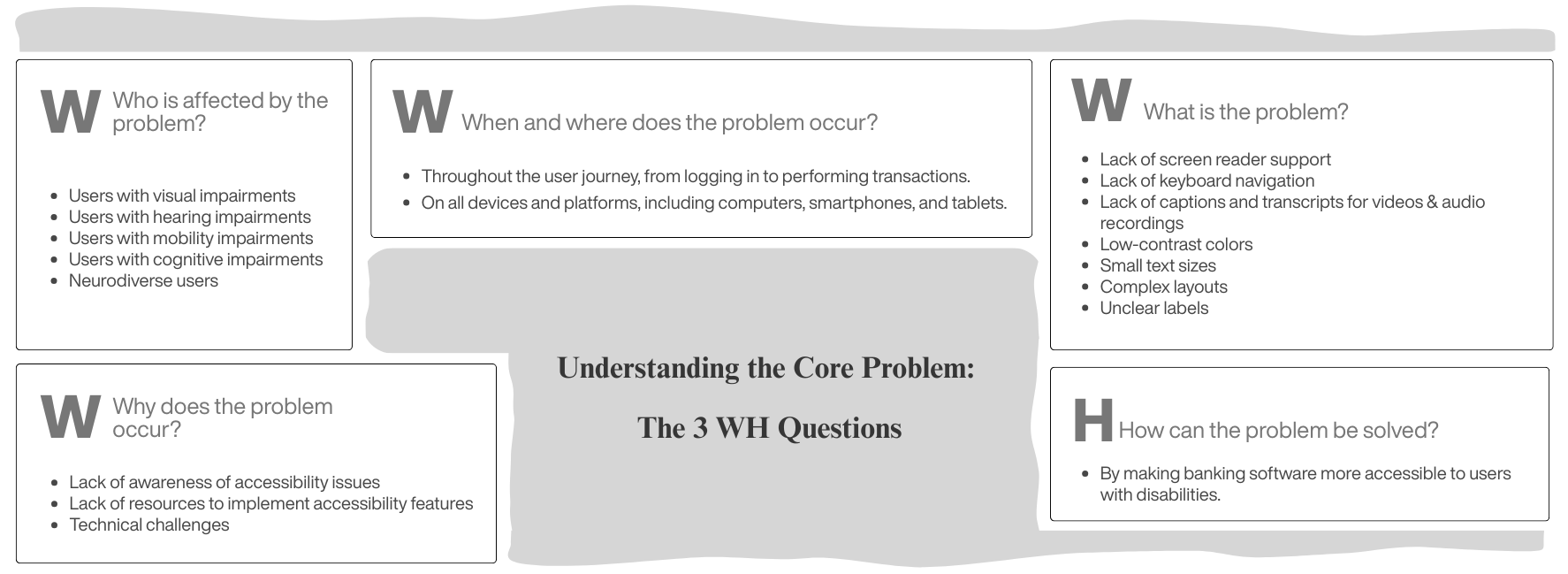
Understanding WH Questions
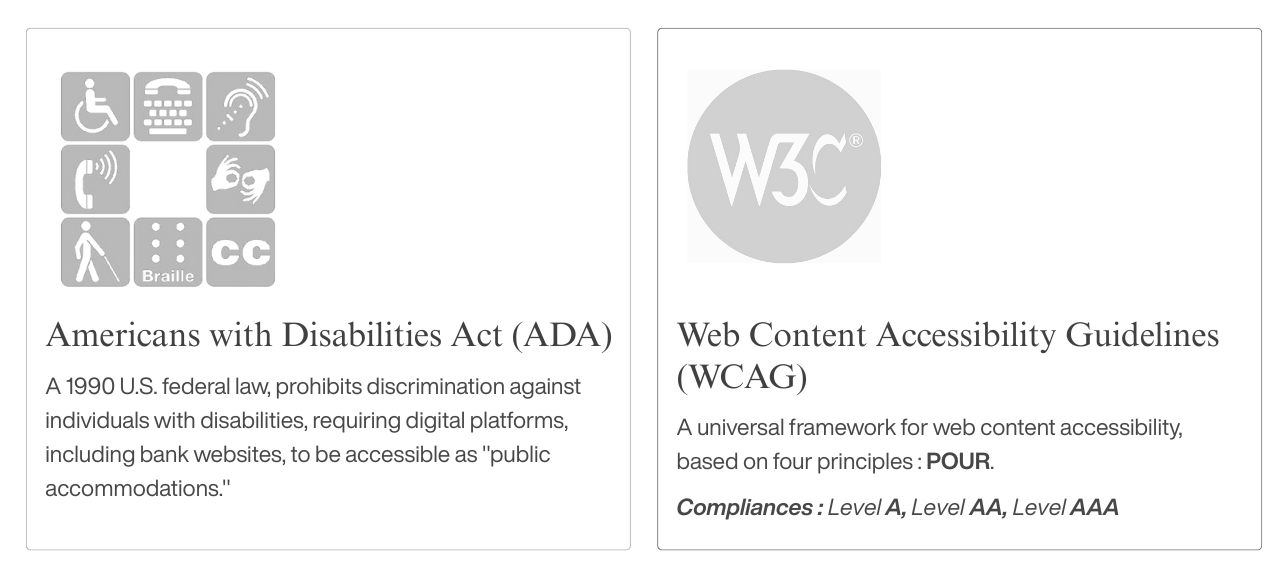
CLARIFYING EXISTING DIGITAL ACCESSIBILITY GUIDELINES AND DIVERSE USER NEEDS
Digital accessibility isn't merely a feature; it's a fundamental commitment!
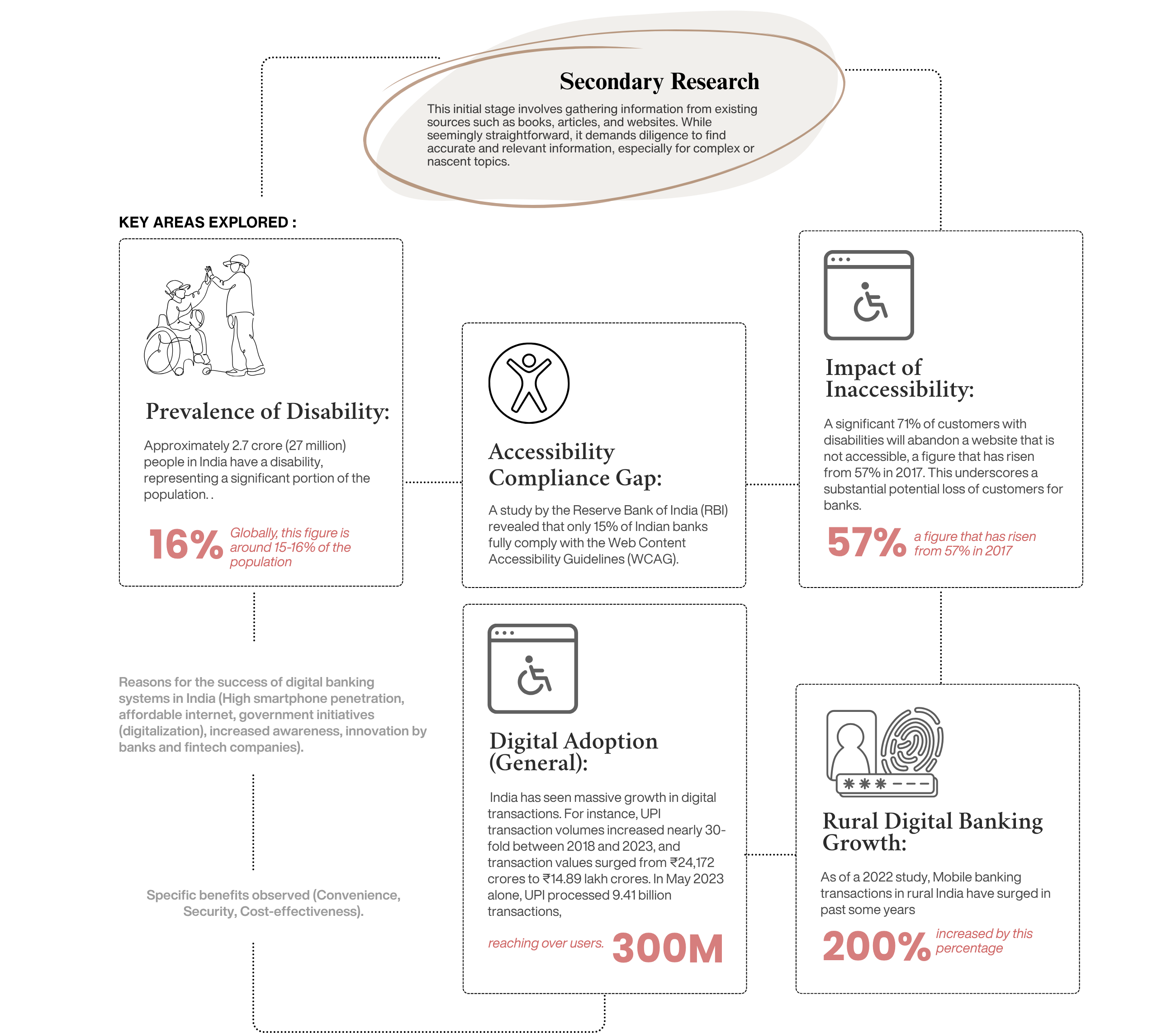
Its importance is underscored by the fact that roughly 16% of the world's population identifies as differently-abled. Failing to design with their needs in mind can inadvertenFtly deny them basic human rights, particularly access to essential services.
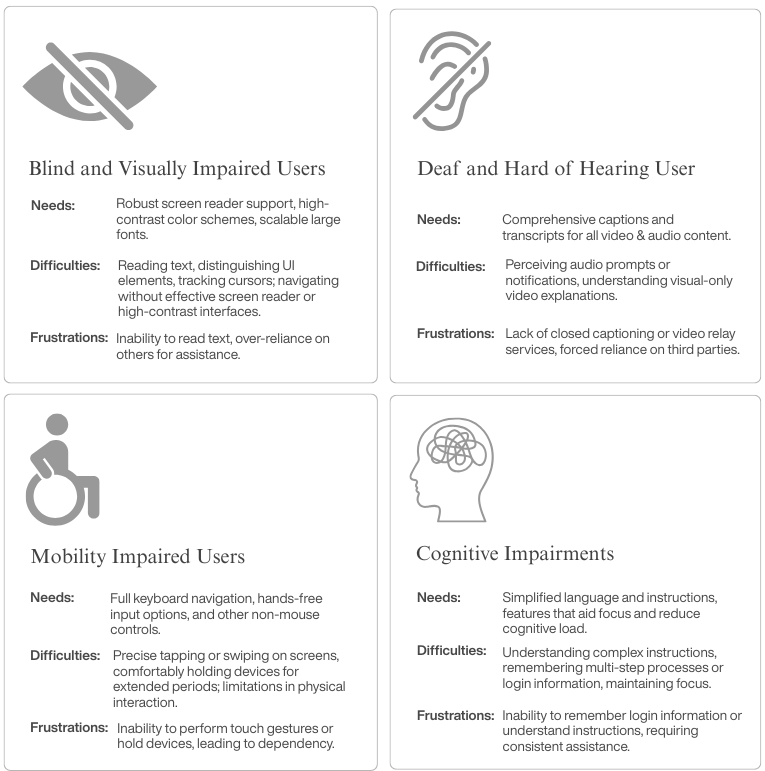
UNDERSTANDING THE DIVERSE NEEDS OF USERS
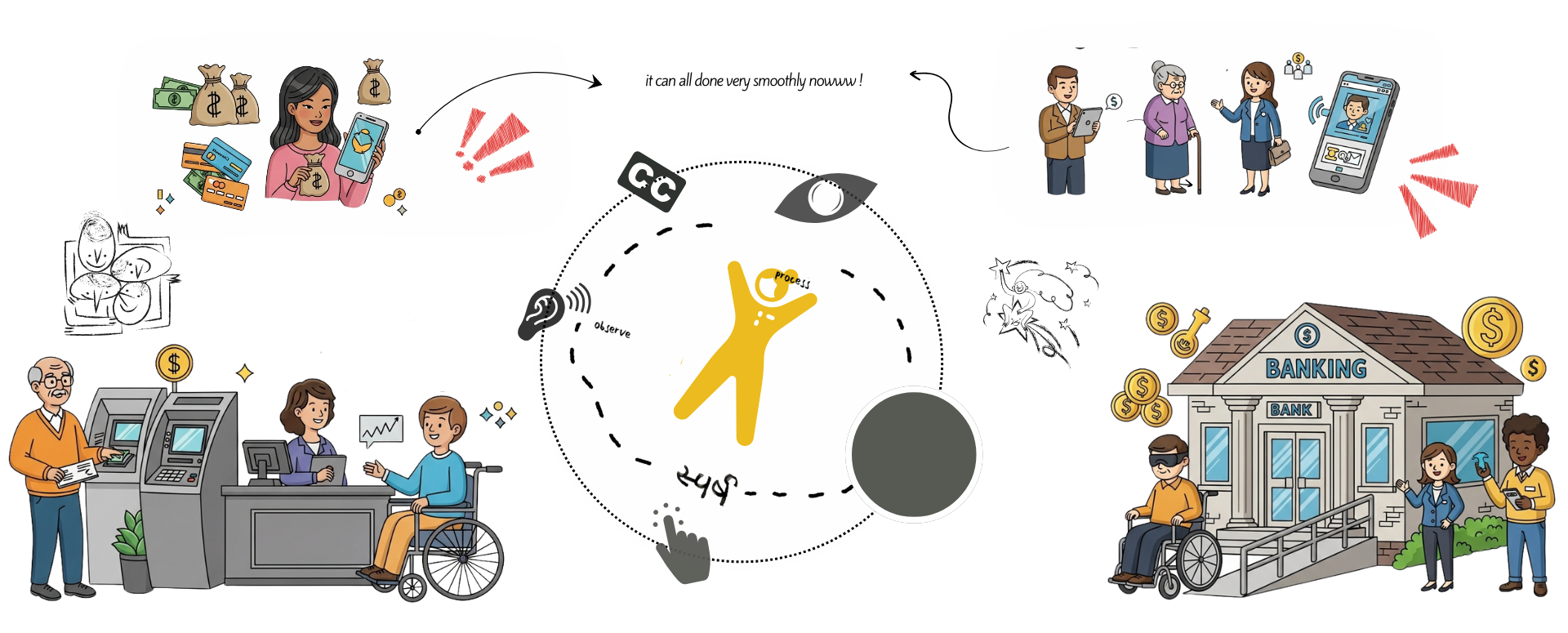
To design truly inclusively, we must deeply understand the specific challenges faced by various user groups:

The project's key objectives are to:

Identify Pain Points: Identify and prioritize specific pain points and challenges that users currently face when interacting with the bank website.
Evaluate the effectiveness of the website's navigation system to: Evaluate the effectiveness of the website's navigation system to ensure users can easily find information and complete tasks.

Assess Transactional Workflows: Examine the user journey through key transactional workflows, such as fund transfers and bill payments, to identify potential obstacles and streamline processes.
DEFINE: THE RESEARCH CHALLENGE IN ACTION
The foundation of any robust UX research lies in clearly defined objectives and a well-structured methodology. My approach to this challenge is no exception.
Assess Transactional Workflows -Assess user journeys for key transactions like fund transfers and bill payments to find obstacles and streamline processes.
Assess Navigation Effectiveness -Assess navigation system effectiveness for easy information finding and task completion.
Identify Pain Points -Identify Pain Points: Identify and prioritize specific pain points and challenges that users currently face when interacting with the bank website.



RESEARCH METHODS

>
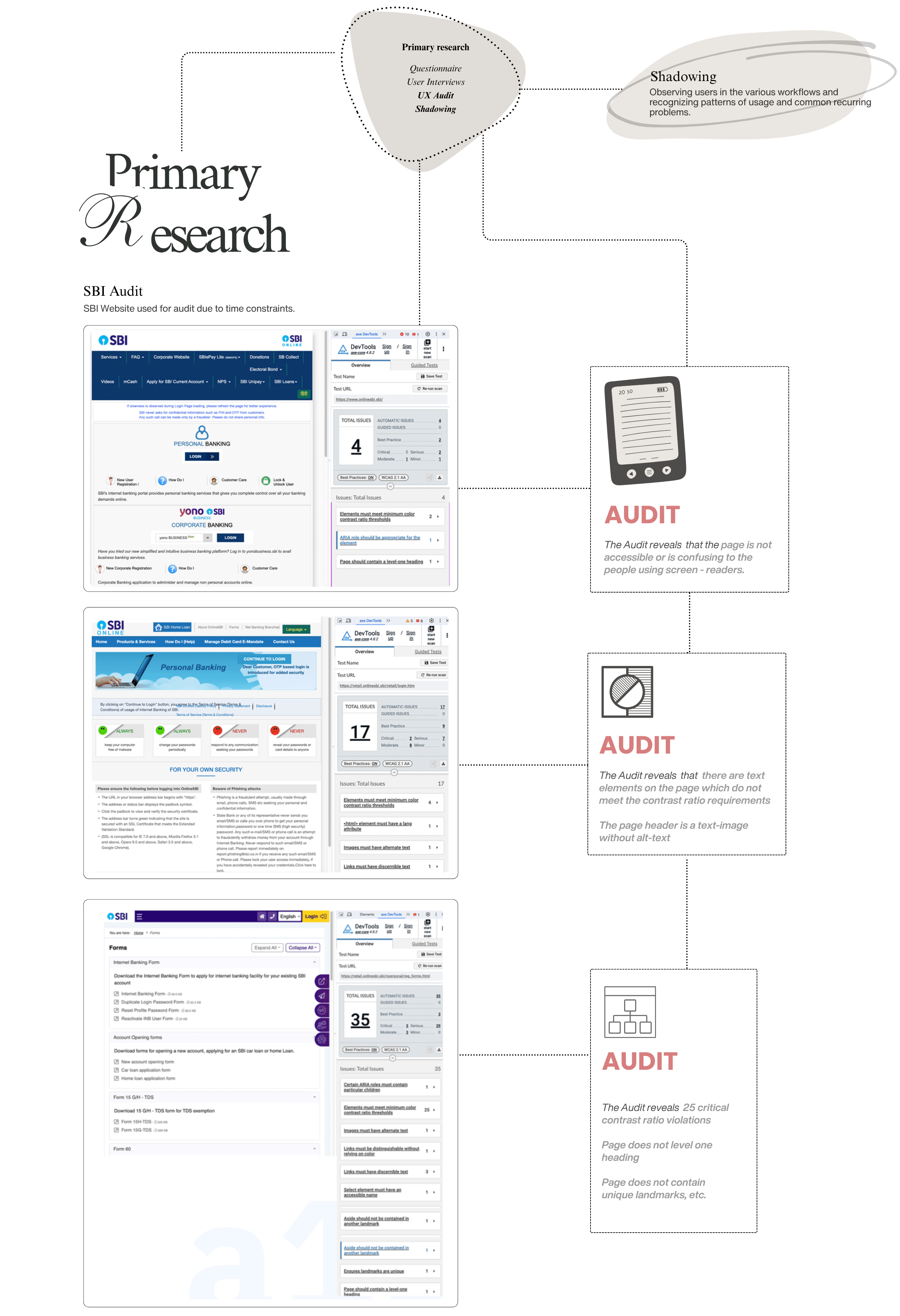
PRIMARY RESEARCH
SECONDARY RESEARCH
DO WE PROCEED ?
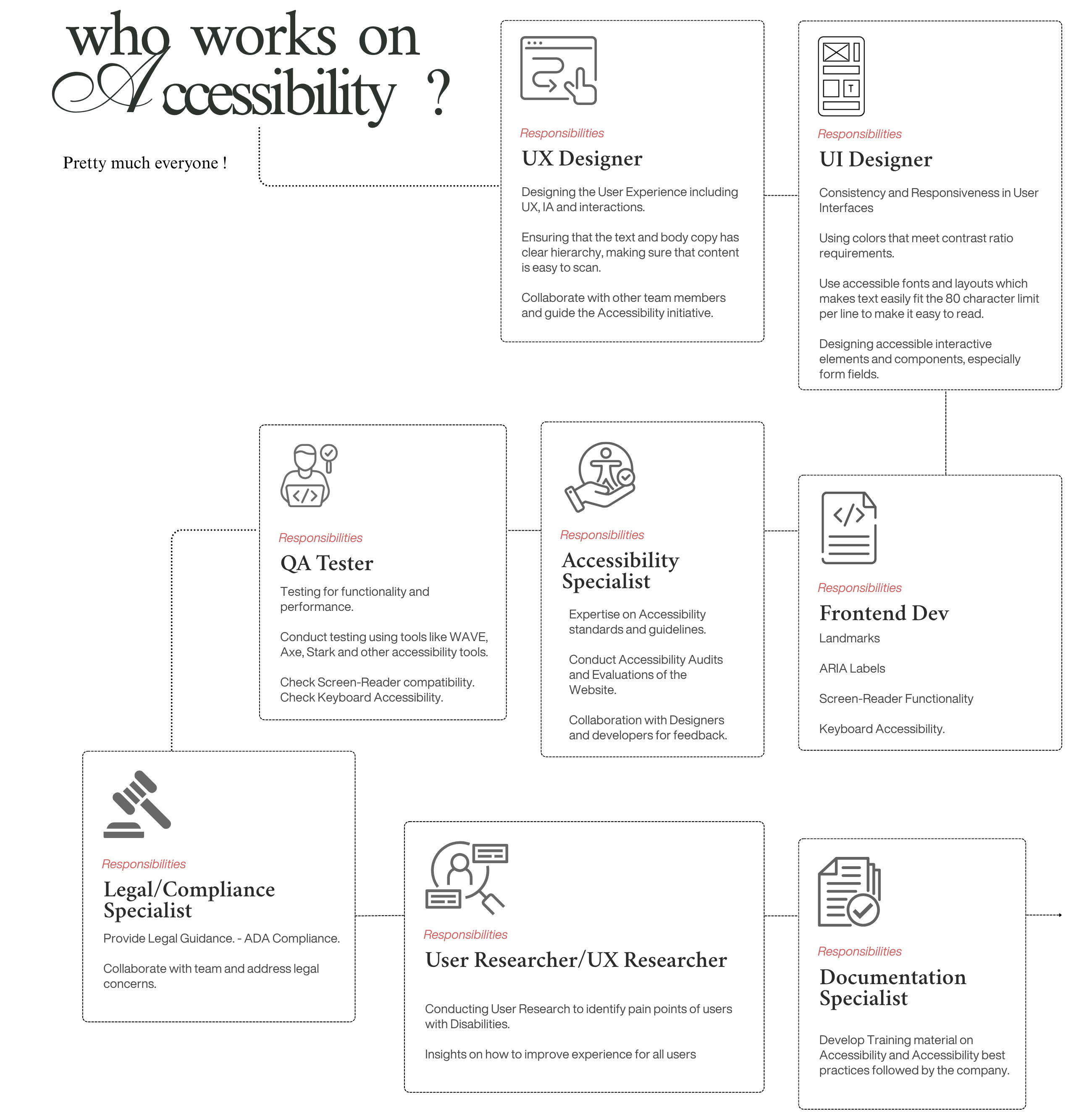
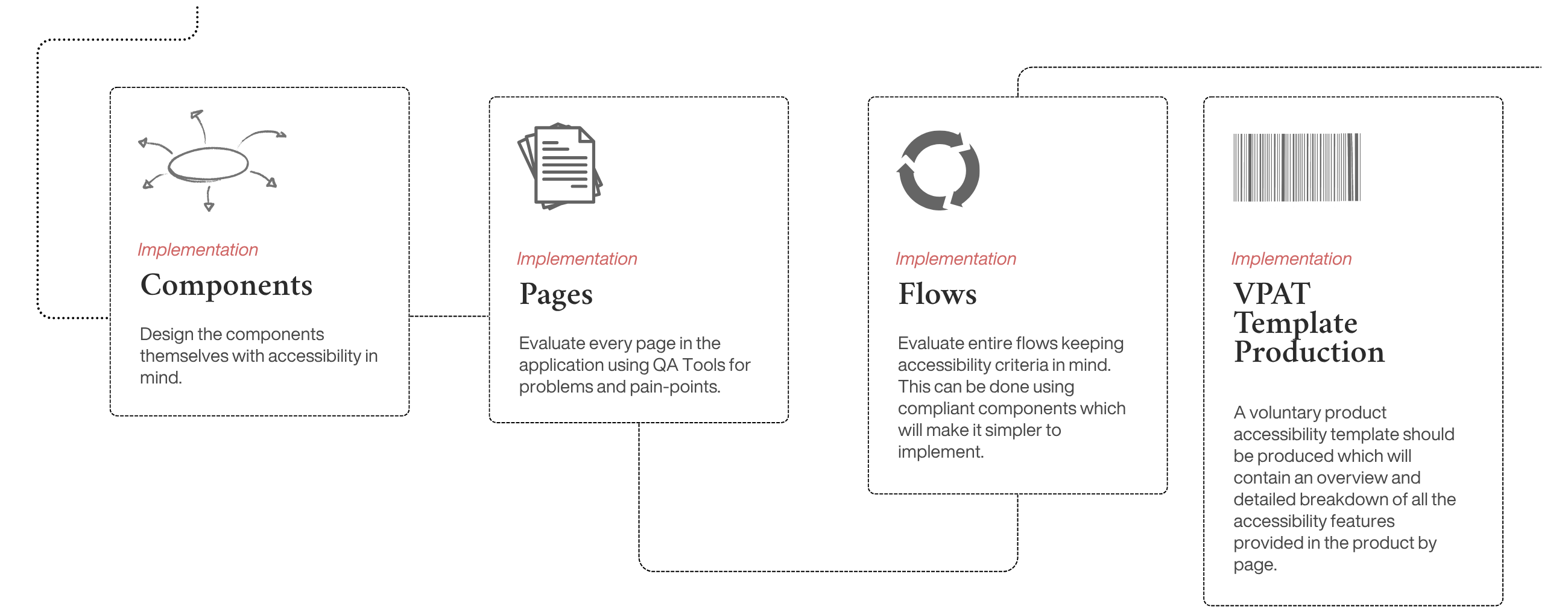
Setting up a game-plan to achieve accessibility compliance
WAYS TO IMPLEMNT, INTERPRET ACCESSIBILITY 
Ways to categorise or interpret accessibility compliance implementation.
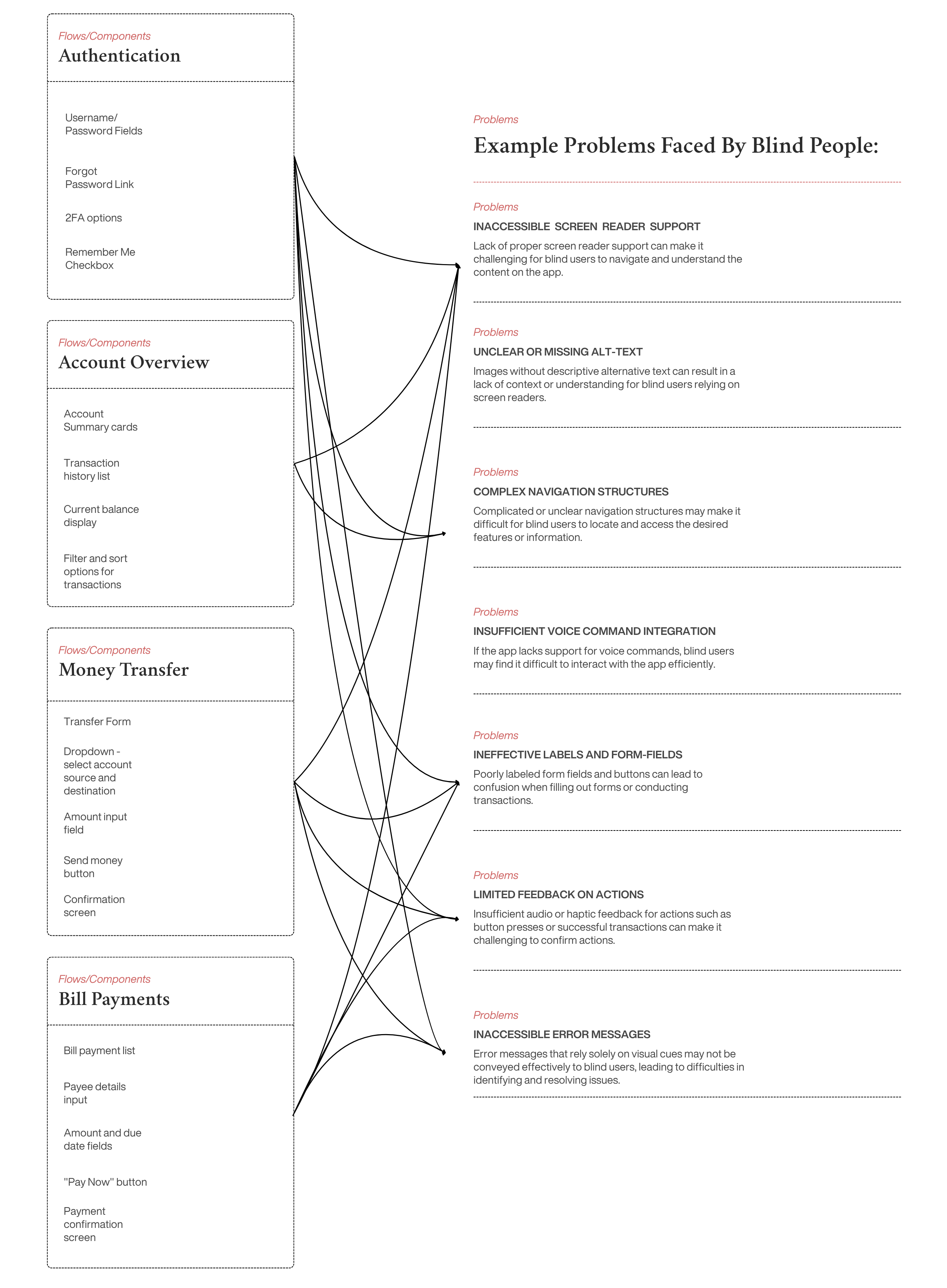
Common Accessibility Barriers in Banking User Flows
Through analysis of common user flows and UI elements in banking applications, several critical accessibility problems can be identified, particularly affecting users with visual impairments.

Example,User Flows with UI Elements

Component - lead Accessibility
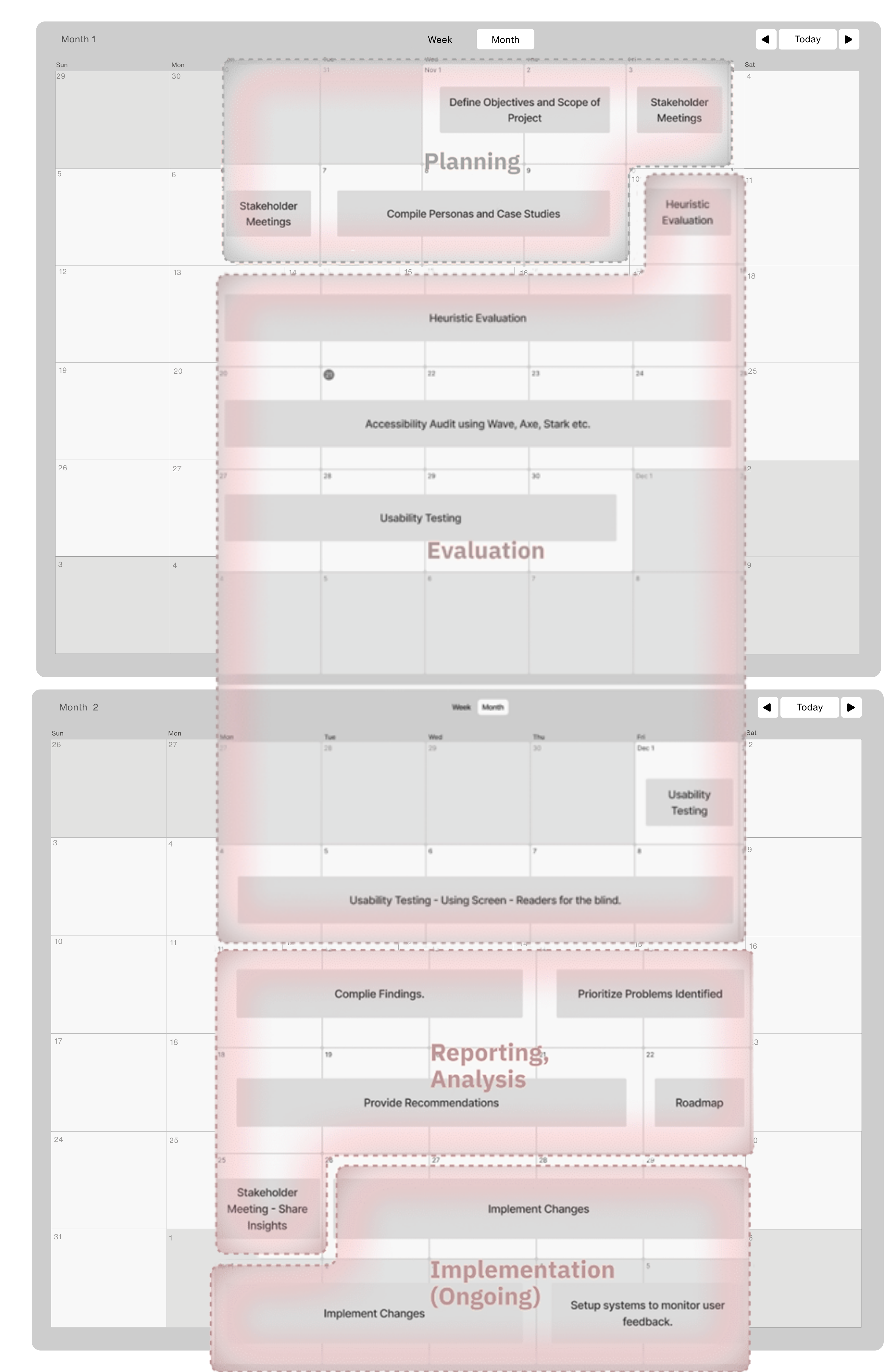
PROJECT TIMELINE
2 month plan for analysis
CONCLUSION
✎ ᝰFuture Scope & Collaboration
The future of banking software for disabled individuals holds immense promise, driven by technological progress. Key areas of development include:

Personalized AI Accessibility: Utilizing AI and ML to adapt interfaces and functions (e.g., font size, color contrast, brightness) based on individual user needs.
Voice-Based Interaction(Intuitive voice interfaces allowing full interaction): Creating user-friendly voice interfaces for easier navigation and transactions, bypassing traditional input methods.
Wearable Integration: Enabling financial management through smartwatches and smart glasses for convenient access to balances, payments, and transfers.
Immersive Technologies (AR/VR): Developing tailored banking experiences, such as 3D balance viewing for visually impaired users via AR or virtual bank branch navigation for mobility-impaired users via VR. Crucially, collaboration with disability organizations is vital. This partnership ensures genuine feedback on accessibility and drives the creation of truly relevant features, directly incorporating insights from the end-users.
𝄞⨾𓍢ִ໋ The Research dives into!
This UX research challenge underscores the urgent need for inclusive design in banking software. By rigorously identifying user pain points, understanding existing limitations, and proposing WCAG-compliant, user-centered solutions, this project lays the groundwork for creating banking experiences that are truly accessible to all. The future technological considerations represent strategic pathways towards a future where financial independence is a reality for every individual, irrespective of their abilities.
─────── *ੈ✩‧₊˚✧˖*°࿐
Let 's keep in touch !
Sakshi Harbhajanka - © 2025
Built and doodled with luv <3