CURRENTLY, THE PROBLEMS IDENTIFIED
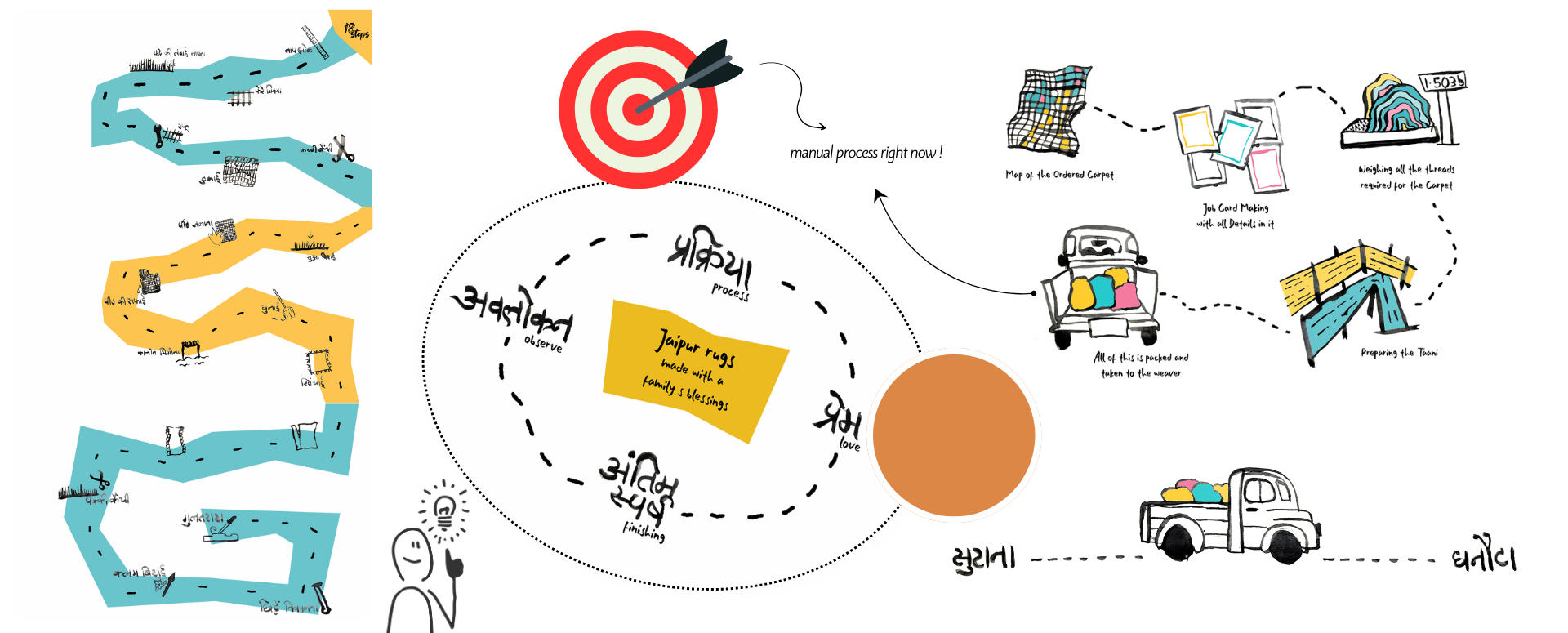
Jaipur Rugs' manual carpet inspection and data entry hindered warehouse operations, causing:
Before digitization, the manual process for inspecting and recording carpet
details was characterized by:
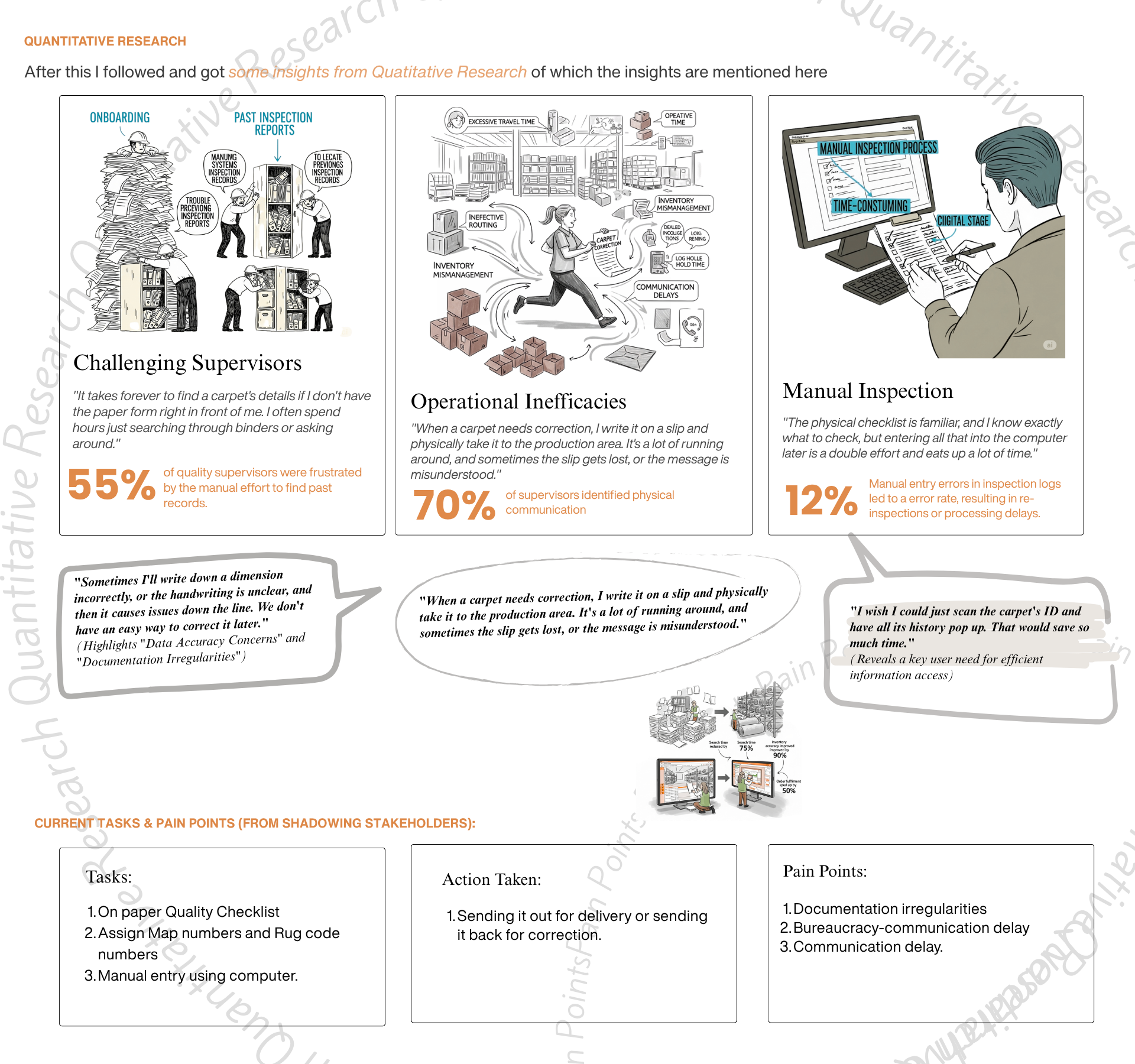
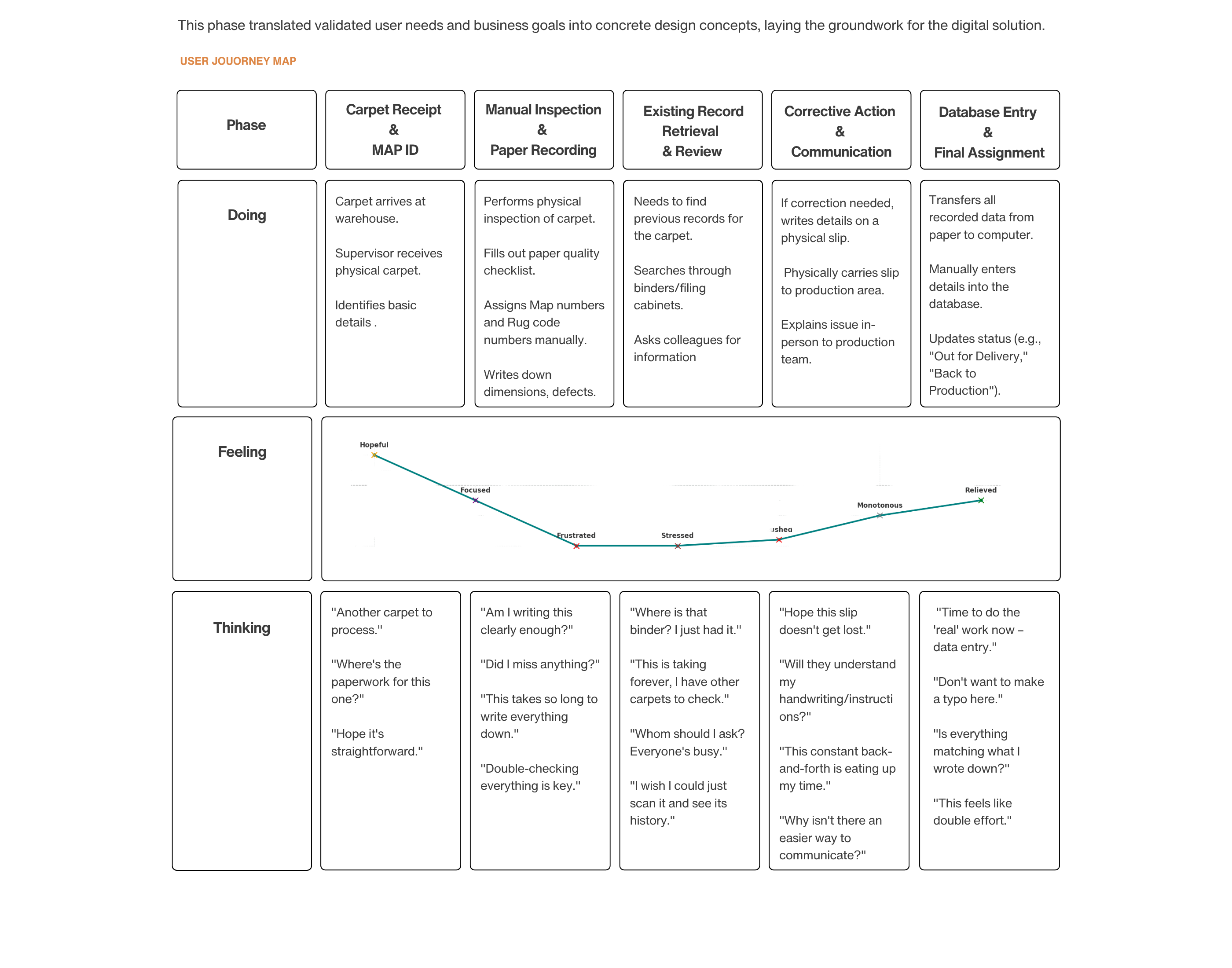
☑ Manual Inspection Process
☒Time-consuming
☒Operational Inefficiencies
☒Documentation Irregularities
☒Bureaucracy and Communication Delays
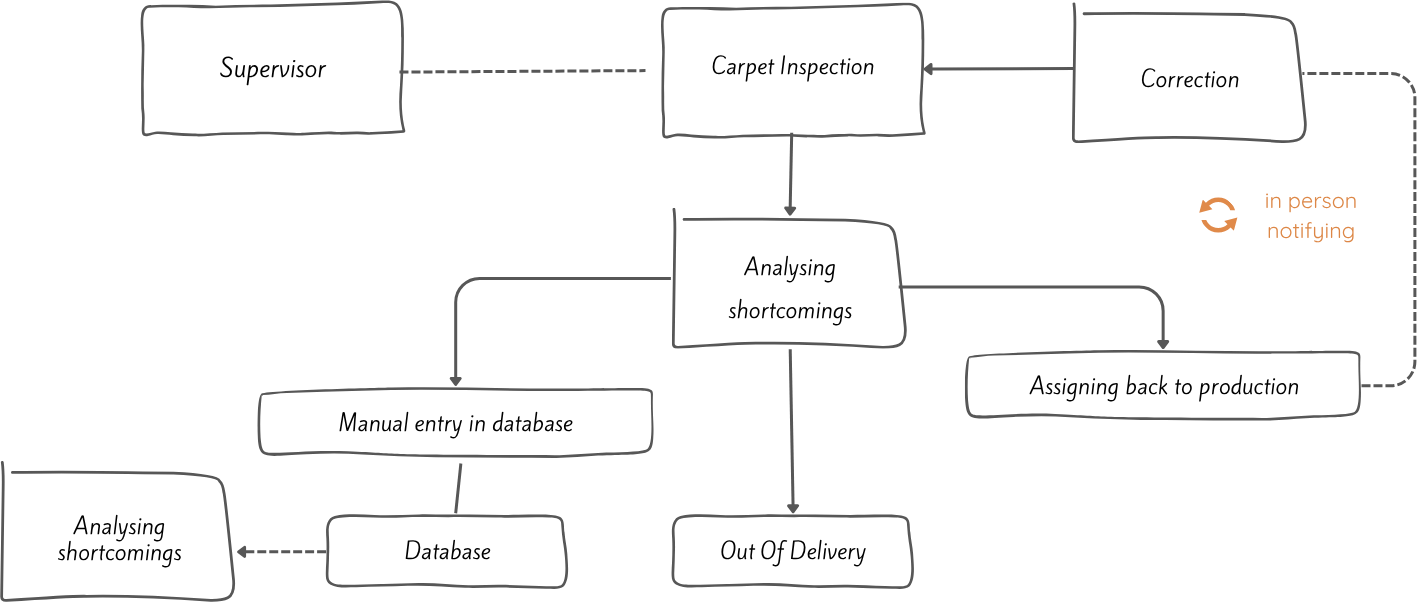
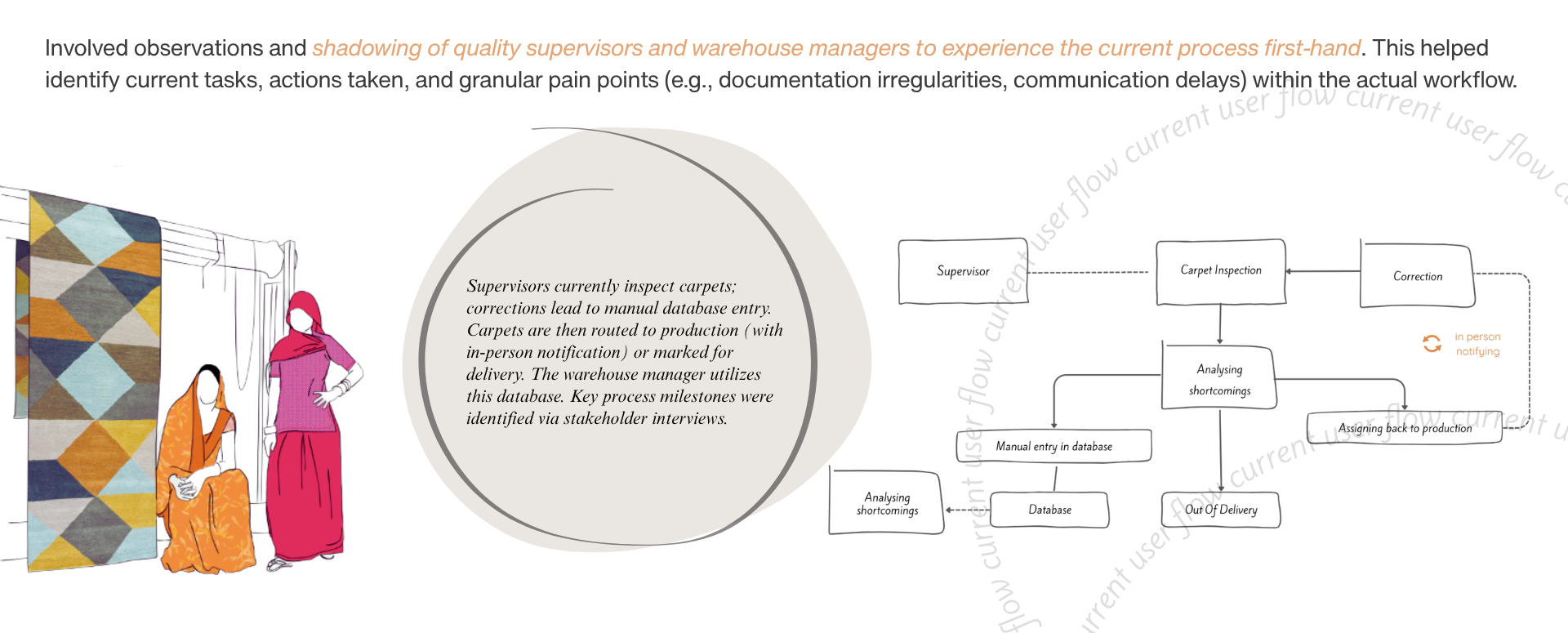
Traditional Process Flow
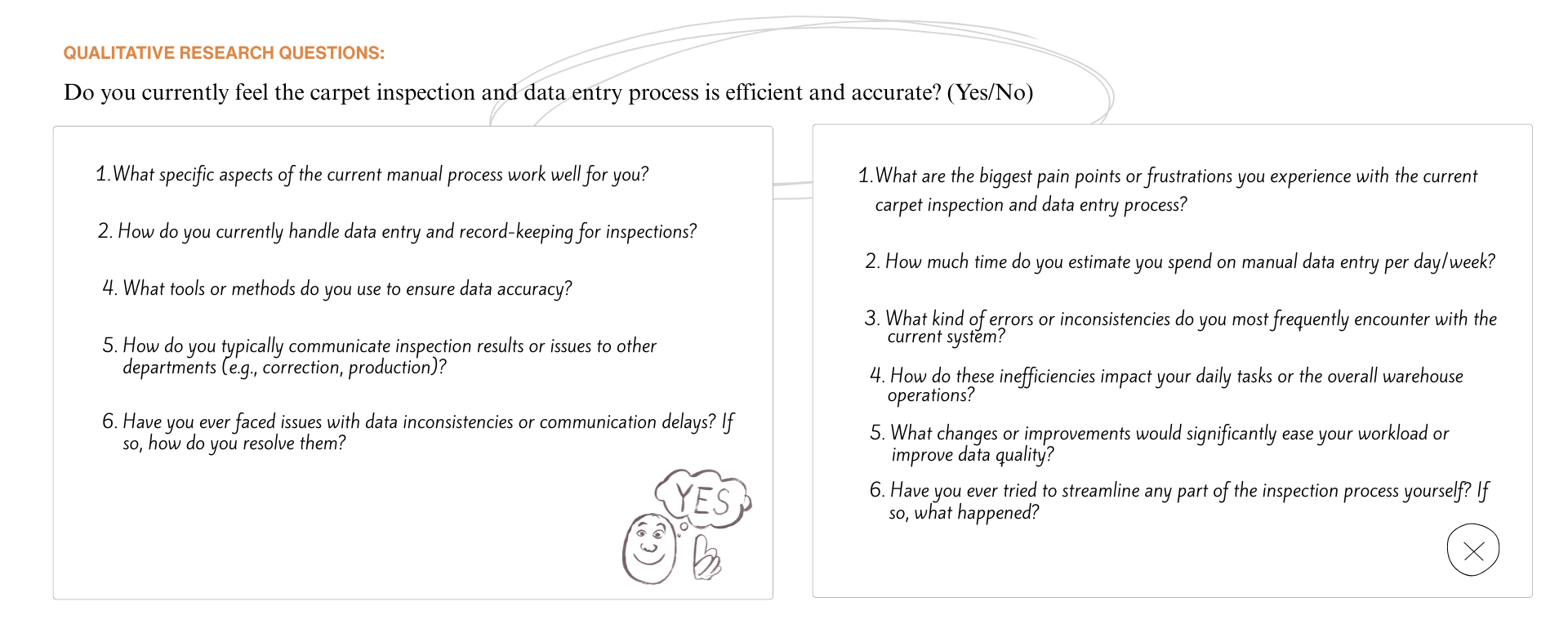
CLARIFYING QUESTIONS
Early in the project, key clarifying questions were addressed to define the scope and
objective.
To define the project's direction and scope, I focused on clarifying 4 key areas::

Business Goal
Saving operations and resource cost

Target Audience
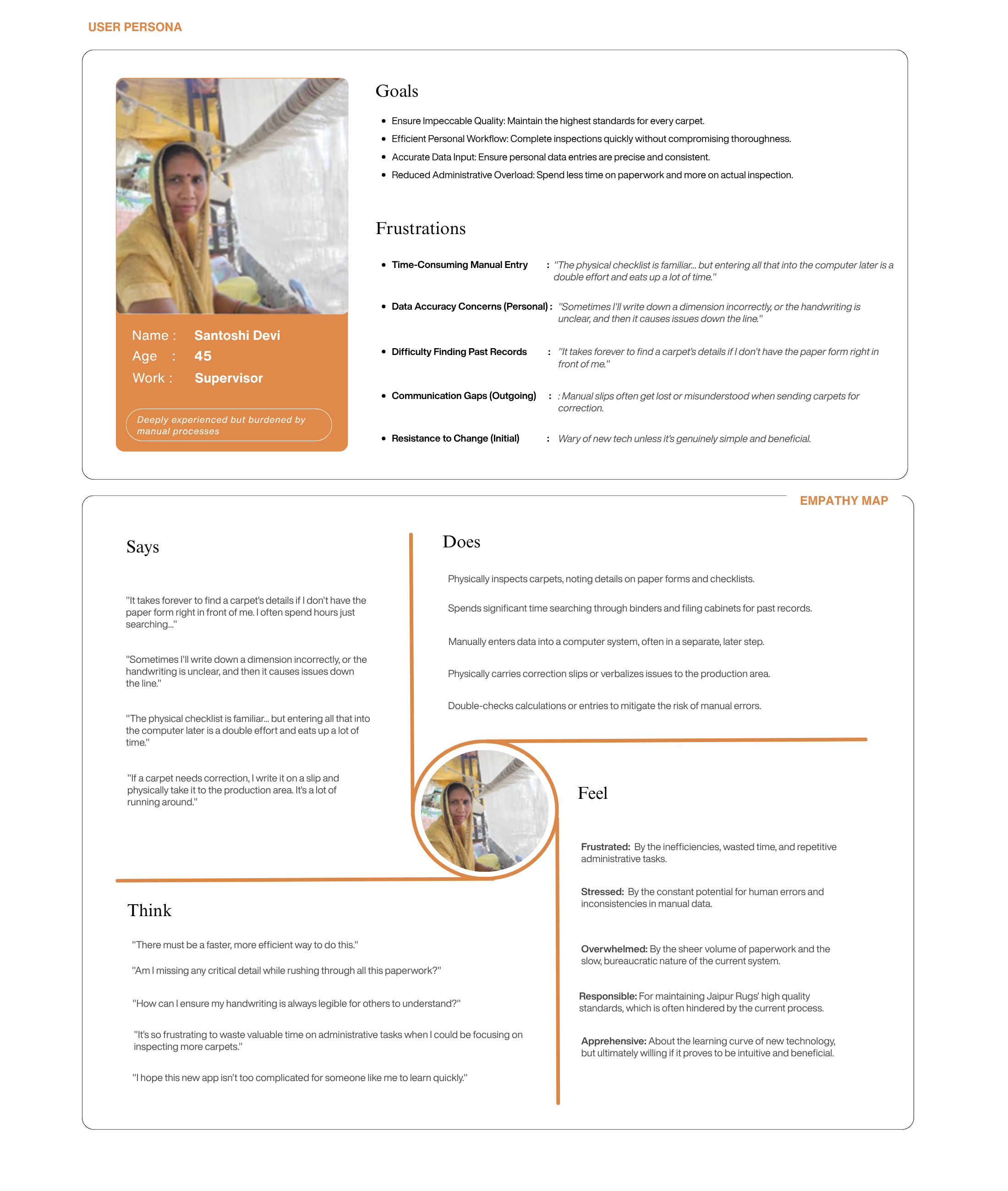
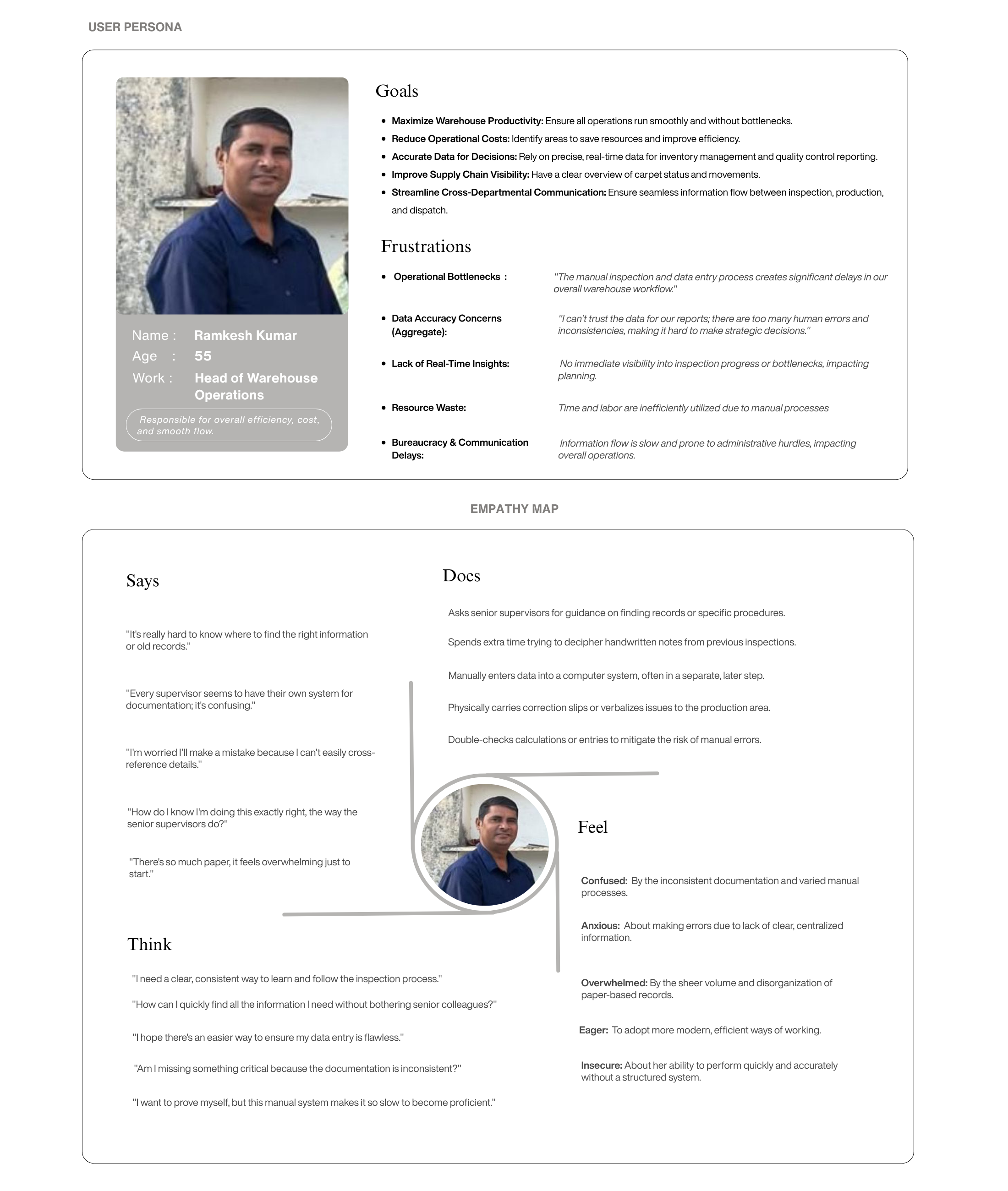
Quality Supervisors & Warehouse Managers
Design Requirements
A non-frictional and process-abiding tablet application
We want to do exactly?
Improving Accuracy and Efficiency in Warehouse Operations

In an era demanding swift and accurate supply chain operations, Jaipur Rugs faced significant
bottlenecks in its warehouse. Quality supervisors, relying heavily on
manual carpet inspection and
data entry, found themselves trapped in a time-consuming and error-prone process.
This led to
pervasive issues like inaccurate records, operational inefficiencies, documentation irregularities,
and communication delays. Supervisors desired a more streamlined and accurate workflow but lacked
the tools to achieve it effectively. Thus, we conceptualized a tablet application to
empower them
with a precise, efficient, and user-friendly solution to maintain optimal warehouse productivity and
quality control.
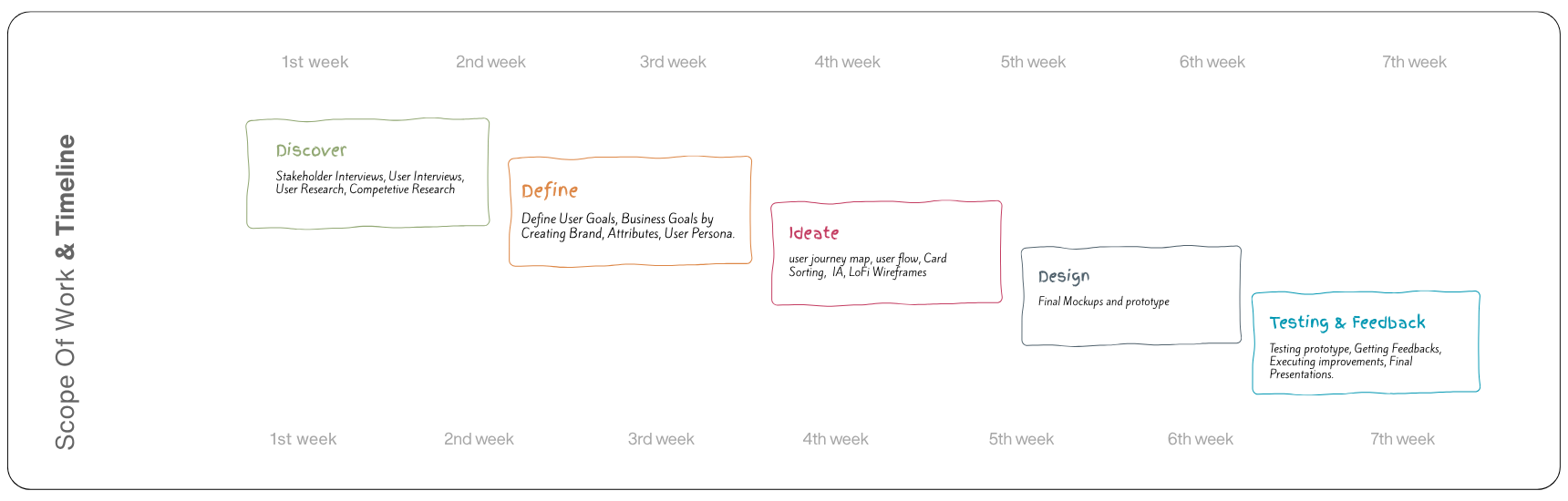
DESIGN PROCESS
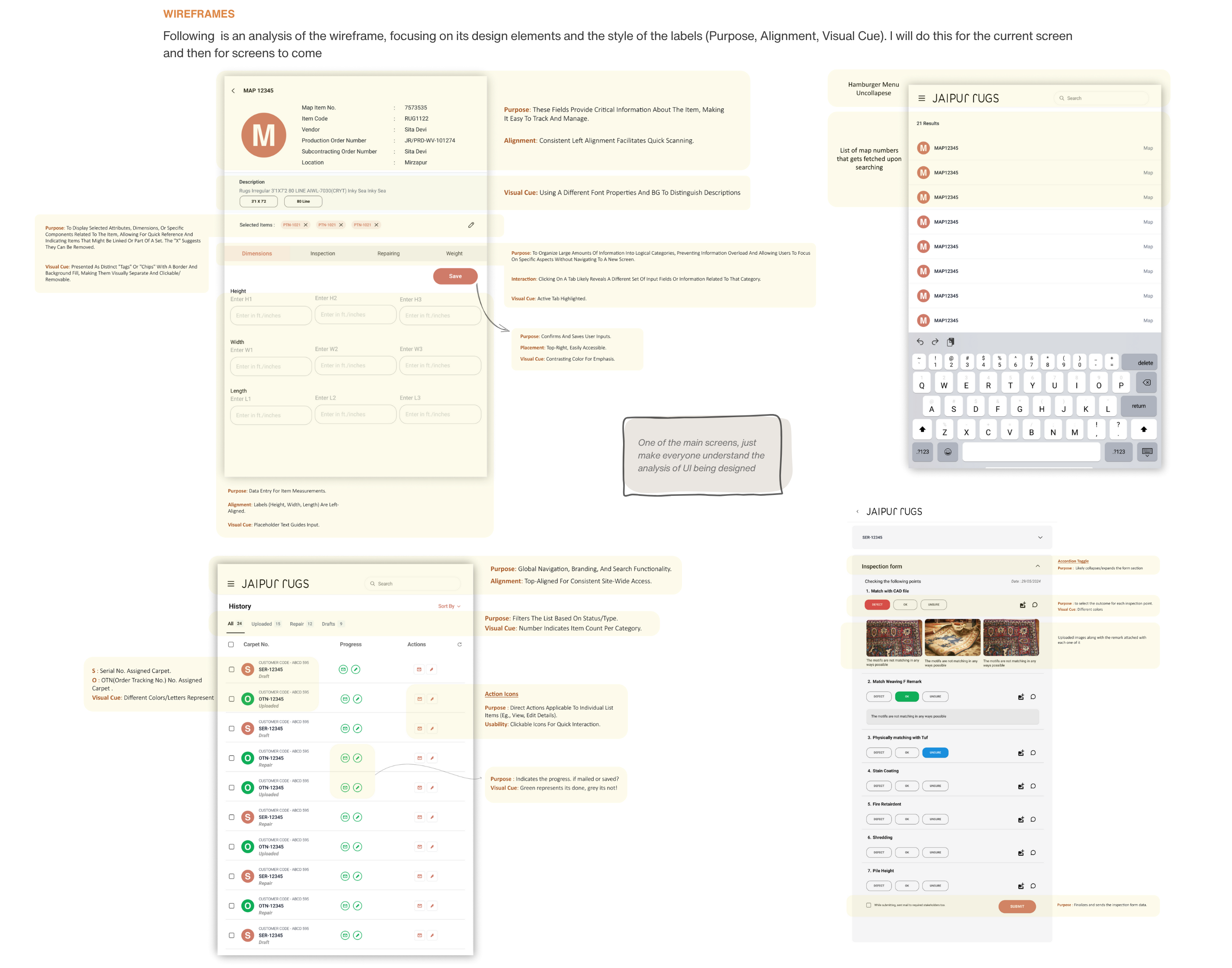
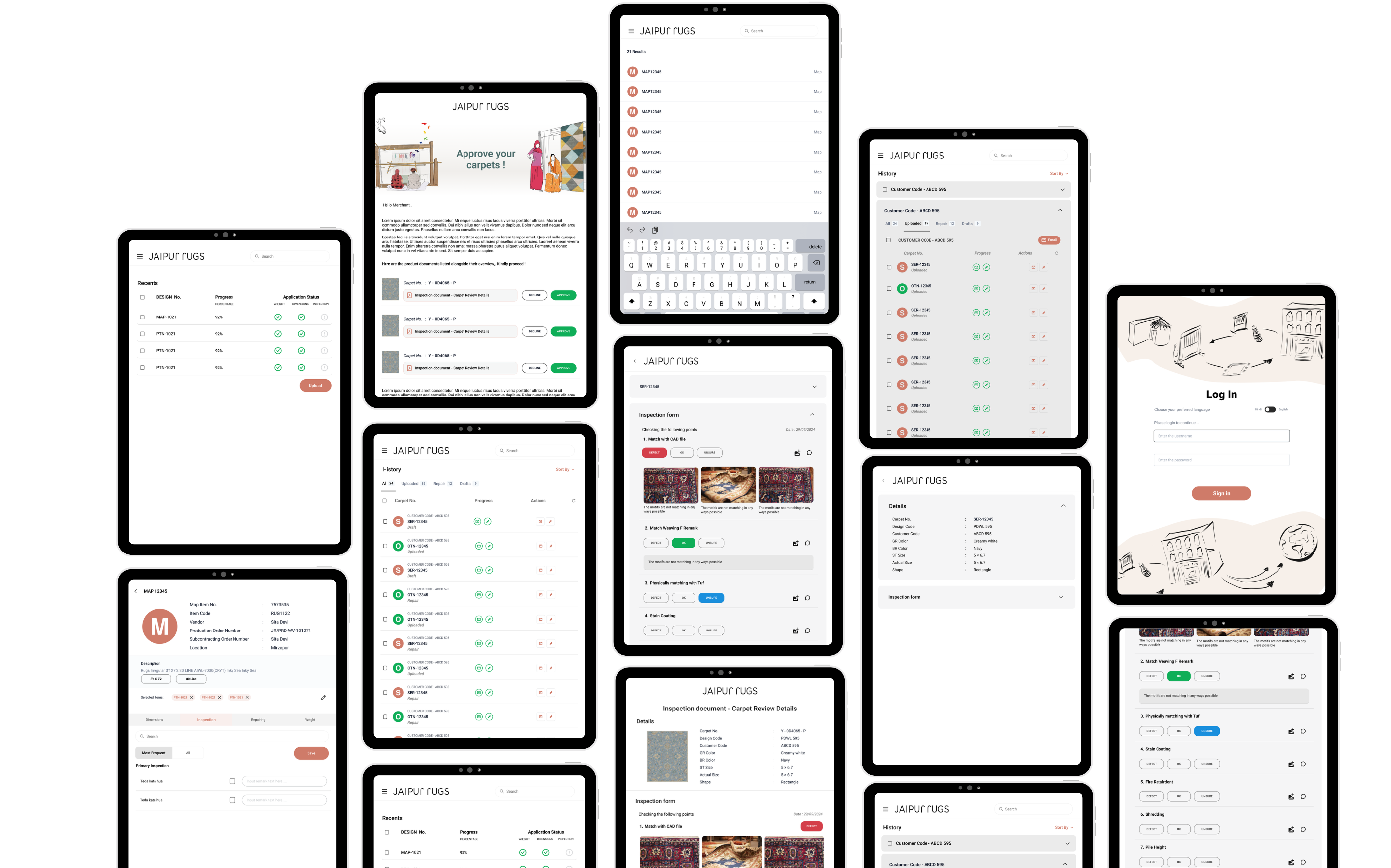
As an experience designer, I was responsible for both startegies & visual design !



.png)


